
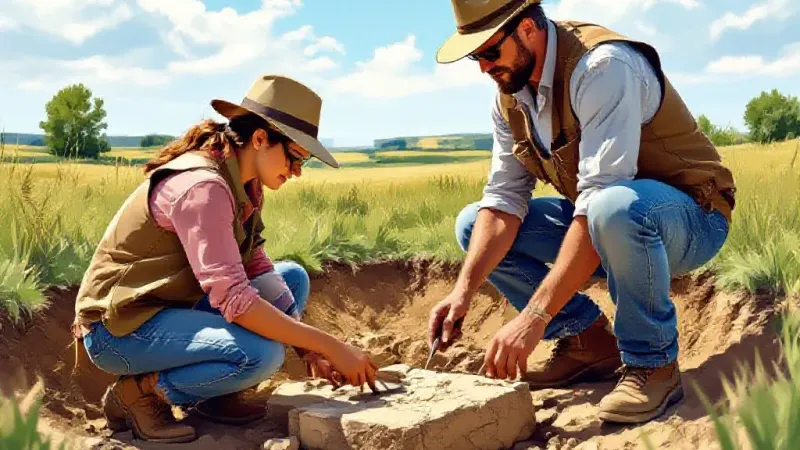
Archaeologists recently removed seven coffins containing human remains, alongside an unknown wooden box, from a construction site situated near the North Dakota governor’s residence. This significant discovery, reported by the Office of Management and Budget, followed the initial unearthing of human remains in May. Those initial remains were found while construction crews were engaged in installing a new security fence around the property.
Following the initial finding, archaeologists undertook extensive fieldwork, exploring more than 80 distinct areas of interest across the property in September. Brandon Solberg, facilities management director for the Office of Management and Budget, stated that the next phase involves archaeologists carefully reviewing and cataloging all the remains and other items discovered during this detailed fieldwork. This comprehensive analysis is projected to continue into early 2027. Solberg emphasized the meticulous nature of the work in an interview last week, noting, "It’s going to take a while now to do the research and analysis." The ongoing efforts by archaeologists are focused on identifying fundamental information about the individuals, such as their age ranges, and potentially any diseases they may have experienced. Solberg clarified that DNA testing will not be incorporated into this analytical process.
The Office of Management and Budget previously provided historical context for the site, indicating that the area where the human remains were discovered once functioned as Bismarck’s first cemetery. This cemetery was active between 1873 and 1877. Historical records show that many of the burials from this early cemetery were subsequently reinterred to other local sites, specifically St. Mary’s Cemetery and Fairview Cemetery, during the 1880s. The statement from the Office of Management and Budget also referenced past discoveries of human remains on the wider Capitol grounds. These include findings in 1903, which occurred during the construction of a trolley line near the southwest corner of the property, and another in 1959, unearthed during the construction of the previous governor’s residence.
In preparation for their respectful handling, the Office of Management and Budget has engaged a local funeral home to assist with the remains. Additionally, Crisis Care Chaplaincy has volunteered its services to ensure the remains are managed with due care and sensitivity. Reinterment of the newly discovered remains at a local cemetery is anticipated to occur in the spring, as stated by Solberg. The construction work that led to the initial discovery is part of broader security upgrades to the governor’s residence. Lawmakers last year approved $2.35 million for these upgrades, which encompassed the installation of the new fence and an extension of the driveway. Regarding the specialized archaeological work, it was estimated to cost the state an additional $155,000 as of September 1, according to figures from the Office of Management and Budget. The office did not issue an update regarding any additional costs incurred after the completion of the exhumation work.