
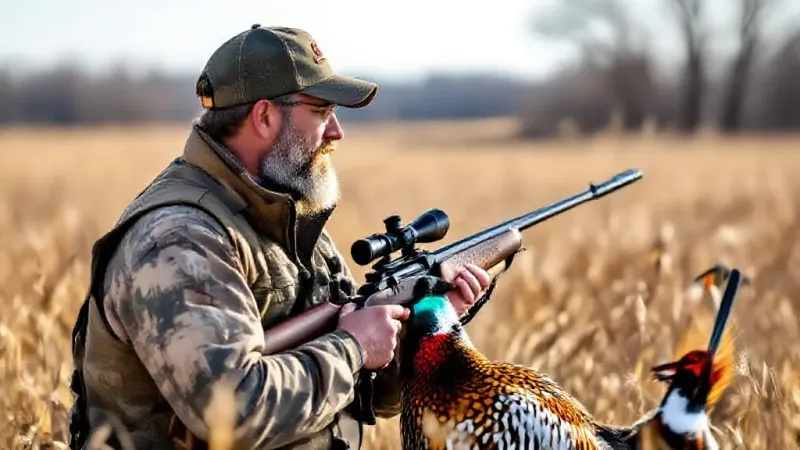
BISMARCK, N.D. — The North Dakota pheasant hunting season is set to open on October 10. Hunters across the state are projected to encounter a comparable or potentially higher number of birds than last year, according to recent analysis from state biologists.
This outlook is based on late summer roadside brood counts conducted by the North Dakota Game and Fish Department between July 20 and August 31. These surveys provide the primary population index for the upcoming fall season. RJ Gross, an upland game management biologist with the North Dakota Game and Fish Department, detailed the findings for each of the state’s four pheasant management districts.
The Southwest district, traditionally a strong area for pheasants, shows numbers similar to the previous year. Gross reported 112 pheasants per 100 miles, which he described as "very good," despite being down just one percentage point from last year. Broods in this district were slightly down at 12.9 per 100 miles, and the average brood size also saw a slight decrease to 5.67 chicks per brood. While the age ratio was lower, Gross noted the presence of many adult birds in the area.
In the Northwest district, pheasant populations experienced a slight uptick. Gross stated the district recorded 84.7 pheasants per 100 miles, an increase of 7% from last year. Pheasant broods per 100 miles were up 3% at 10.53, and the average brood size also rose by 5%, averaging 4.67 chicks per brood. The age ratio for this district was down slightly compared to last year.
The Northeast district, the largest in the state and not typically known for robust pheasant numbers, saw a considerable increase. Gross detailed a 95% jump over last year, bringing the count to 43.1 pheasants per 100 miles. He clarified that while a 95% increase sounds substantial, it stems from smaller base numbers, making the changes more pronounced. Broods per 100 miles increased by 64% to 4.89, and the district recorded the best brood size this year at 6.04 chicks per brood. The age ratio for this district was slightly down at 1.66 young per adult.
Conversely, the Southeast district experienced a decline in pheasant numbers this year. Gross reported a 10% decrease, with 63.9 pheasants per 100 miles. Broods per 100 miles were also down at 8.6. The average brood size remained consistent with last year, at just under five chicks, and the young per adult ratio also stayed the same.
Overall, RJ Gross reiterated that hunters preparing for the October 10 opening can anticipate seeing a number of birds similar to, or potentially greater than, the previous season.