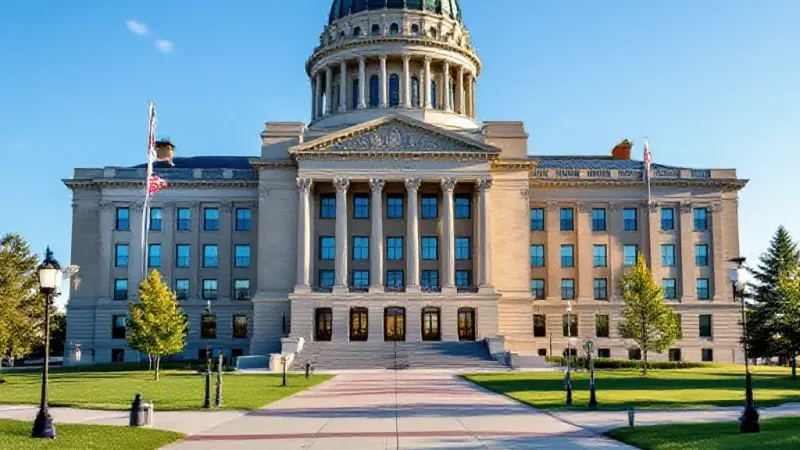
North Dakota's Military Gallery, a $78 million project on the Capitol grounds, is set to restart construction as early as next week after the state Legislature passed and the governor signed a bill providing a new financial lifeline. House lawmakers approved the measure 71-22 on Friday, allocating a new $20 million loan and removing restrictions from $15 million in already designated state funds. Governor Kelly Armstrong signed the bill later the same day. Construction on the gallery had been stalled since July 3 due to insufficient private fundraising.
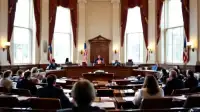
The Capitol Grounds Planning Commission, now charged with project oversight by the new legislation, met Friday. The commission unanimously approved nearly $4.5 million in payments to contractors and voted to restart construction. Tom Job, physical plant director for the Office of Management and Budget, indicated that concrete could be poured as early as Tuesday or Wednesday of next week. The commission plans further discussion at its regular meeting this Thursday and another meeting in roughly four weeks to review a revised schedule and authorize associated costs. Rep. Bernie Satrom, R-Jamestown, a commission member, stressed the need for transparency and vigilance on every item moving forward.
The new $20 million line of credit comes from the Bank of North Dakota and is intended to be repaid by private donations by March 2029, though future Legislatures could extend this deadline. Lawmakers had previously committed $39.2 million in state funding to the project. An earlier $20 million line of credit from the Bank of North Dakota has already been spent, accruing $581,000 in interest, which the 2027 Legislature will need to budget to repay. Previously, access to $15 million in state funds was contingent on raising nearly $12.8 million in pledges, a benchmark now removed by the new legislation. Private fundraising efforts have so far secured nearly $4.2 million in pledges, with about $800,000 collected, according to recent testimony. The State Historical Society of North Dakota, North Dakota National Guard, and their foundations are jointly working on the project.
The financial difficulties prompted many lawmakers to call for new legislation in the 2027 session to prevent similar mismanagement in public-private partnerships. Rep. Austen Schauer, R-West Fargo, questioned how the situation arose and how to avoid it in the future, noting that some blame falls on the Legislature for not establishing a proper framework. Schauer stated that "Good intentions are not financial plans," advocating for clear benchmarks, realistic fundraising assumptions, financial safeguards, accountability, and contingency plans before construction begins on future projects. Rep. Bill Tveit, R-Hazen, criticized the project for becoming a "Taj Mahal" and event center beyond its original scope, arguing that construction started prematurely without adequate funding. Tveit emphasized that holding those responsible is crucial to prevent recurrence. Sen. Sean Cleary, R-Bismarck, proposed a bill that would require 75% of funding to be secured for similar projects before construction can start. Although not allowed for introduction in the special session, Cleary plans to submit a revised version in January, seeing it as a necessary safeguard, especially with anticipated legislative turnover. Cleary is also exploring whether state agencies should be legally permitted to sign construction contracts without immediate access to the necessary funds.
Governor Armstrong expressed relief that the Legislature took action, stating that doing nothing was not an option. He acknowledged his administration shares some responsibility for the project's issues and anticipated "tough hearings and some tough questions asked." Armstrong asserted that he could not "imagine a scenario happening like this again as long as I’m governor." He noted that he took office in mid-December 2024, and Lt. Gov. Michelle Strinden's involvement in the Joint Military Museum Advisory Committee, which oversaw the gallery's development, began recently, with the decision to proceed with construction in May 2025 occurring in her second meeting on the board and her first fundraising discussion. Armstrong supported the decision to begin construction at the time, citing affirmations about pledges and the real consequences of delaying. He concluded that while "None of these decisions, as we sit here today, turned out to be particularly great," there were valid reasons for them.