
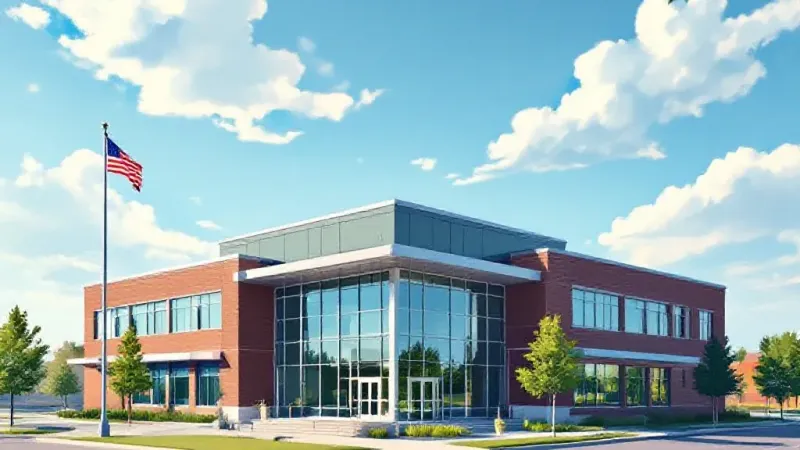
ICE efforts continue across Bismarck and Mandan, with many individuals arrested in the state ending up at the Burleigh-Morton Detention Center in Bismarck. The detention center maintains a decades-long relationship with federal immigration enforcement agencies, though recent shifts in bed availability have impacted the number of federal detainees housed at the facility.
Major Trent Wangen, assistant administrator for the Burleigh-Morton Detention Center, confirmed that the facility's collaboration with federal law enforcement partners, including those performing immigration duties, extends back for many years. He noted that the detention center had a prior relationship with the Immigration and Naturalization Services (INS), the agency that performed ICE duties before its current iteration. Wangen stated that this relationship has existed for the "whole length of my career," indicating a deep-rooted history of federal partnership.
Historically, the jail accommodated only occasional immigration holds. However, as other facilities across North Dakota experienced capacity issues, the Burleigh-Morton Detention Center expanded its role. The facility agreed to house ICE detainees for longer durations, effectively becoming a central hub for federal immigration holds in the state. This change led to a clear spike in ICE detainees starting last year.
Despite its long-standing federal partnerships and its role as a central holding facility, administrators at the Burleigh-Morton Detention Center emphasize that federal beds are always the last priority when determining detainee placement. This policy means that if local or state beds reach full capacity, the number of ICE detainees housed at the facility must decrease to accommodate state and local arrests.
Major Wangen elaborated on this current shift, stating that many of the beds that had been utilized for ICE in 2025 are now being used for North Dakota state prisoners. This change is a direct response to a bed shortage experienced by the North Dakota Department of Corrections, with the Burleigh-Morton Detention Center providing assistance. As a result of this reallocation of resources, Major Wangen reported that the ICE numbers in 2026 have "actually went down."
Jail leaders confirmed they are in constant communication with ICE regarding open bed space. However, their primary commitment remains to handling arrests originating within Burleigh and Morton counties. The Burleigh-Morton Detention Center currently collaborates with over twenty different local, state, and federal agencies to house detainees, dependent on available space.