
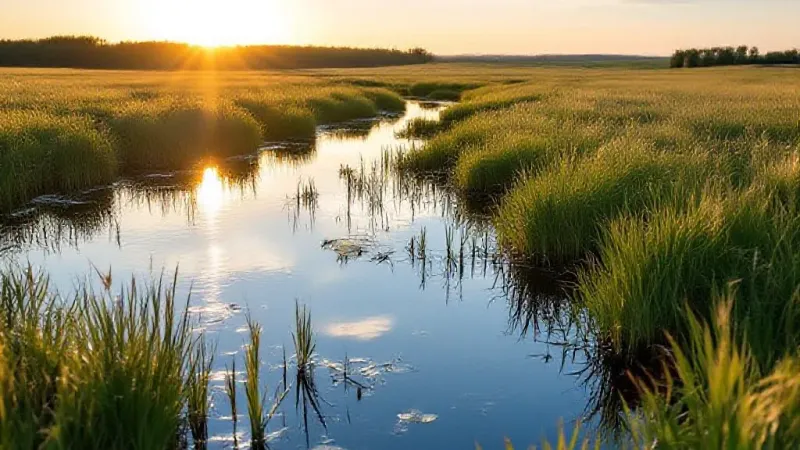
Bismarck, N.D. — A new proposal from the Trump administration seeks to narrow the definition of federally protected waterways under the Clean Water Act, a move that could significantly alter oversight for wetlands and smaller streams across North Dakota. The proposed rule, introduced by the Environmental Protection Agency and the U.S. Army Corps of Engineers, aims to clarify and reduce the extent of federal jurisdiction over these water bodies. This marks the second time the administration has worked to limit the scope of federal wetland oversight.
The primary objective of the proposed change is to relieve landowners, agricultural producers, and developers from the regulatory expense often associated with determining if dry creeks or ditches on their property require federal permits. For agricultural producers specifically, the revision is designed to offer greater flexibility in managing land and drainage. Rick Warhurst, a wetland biologist with the North Dakota Natural Resources Trust, explained that agricultural producers prefer straight paths for their tractors and avoid getting stuck, highlighting their desire to avoid driving around wetlands.
However, Warhurst has expressed warnings that easing these federal regulations could lead to significant environmental repercussions, particularly in North Dakota. The state is situated at the heart of the continent's "Prairie Pothole" region, an area characterized by numerous small, shallow wetlands.
Under the new guidelines, seasonal or isolated wetlands would lose their Clean Water Act protections if they do not maintain a continuous surface connection to larger, traditionally navigable waters. The proposed rule would also stipulate that any body of water dry for more than 30 consecutive days would no longer qualify for federal protection.
Biologists emphasize that while seasonal wetlands may dry up for portions of the year, they perform critical ecological functions. These wetlands are vital for absorbing rain and snowmelt, which in turn helps to slow flood runoff. Additionally, they serve as crucial breeding grounds for migratory waterfowl, supporting regional biodiversity.
Warhurst specifically challenged the premise that these wetlands are truly isolated from larger water systems. He stated that wetlands in the prairie pothole regions are connected to larger river systems like the Missouri, Cheyenne, and Red Rivers through watersheds and groundwater impacts. Rather than diminishing federal oversight, Warhurst argues that federal agencies should aim to expand protections, working to restore historical wetland conservation standards.
A final decision on the proposed rule has not yet been scheduled by the Environmental Protection Agency and the U.S. Army Corps of Engineers. The implications of this proposal are closely watched by residents and stakeholders in Burleigh and Morton counties, given the integral role wetlands play in the local environment and agricultural landscape.