
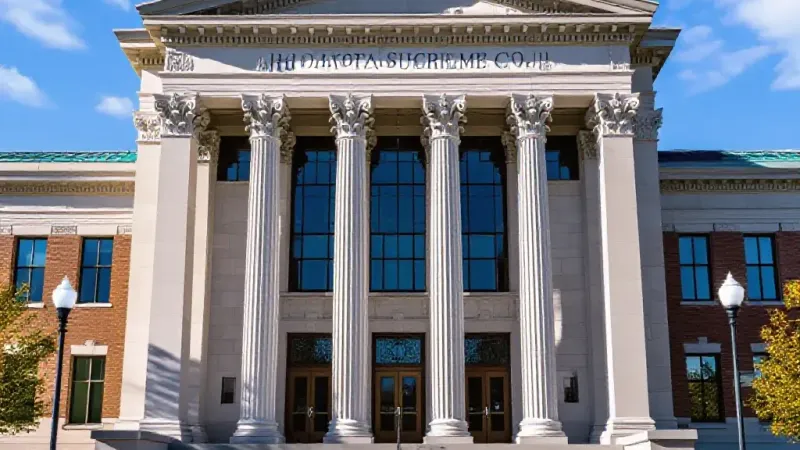
BISMARCK, N.D. — The North Dakota Supreme Court on Thursday unanimously affirmed the state’s ban on gender-affirming care for minors, finding the 2023 law to be constitutional. This decision upholds a lower court’s ruling from last year and impacts the provision of medical treatments for adolescents in Burleigh and Morton counties and across North Dakota.
The 2023 law criminalizes the prescription of puberty blockers and other specific treatments to adolescents. The high court's reasoning closely mirrored that of South Central Judicial District Judge Jackson Lofgren, who, in October 2025, rejected claims by North Dakota pediatric endocrinologist Luis Casas that the law compelled him to withhold necessary medical care from his patients.
In its opinion, authored by Justice Douglas Bahr, the Supreme Court determined that the North Dakota Legislature had not overstepped its authority in enacting the ban. The court stated it was not its role to interfere with how lawmakers choose to regulate the medical field. Justice Bahr’s opinion also asserted that arguments regarding the safety and effectiveness of gender-affirming treatment belong in the Legislature, not before the court.
The Supreme Court also agreed with Judge Lofgren's conclusion that transgender people do not qualify for special legal protections under the law. Furthermore, the court found that the gender-affirming care ban does not discriminate on the basis of sex.
Dr. Luis Casas, represented by the legal group Gender Justice, issued a statement Thursday calling the state law government overreach. Dr. Casas stated that the ruling meant "the government still stands between me and my patients," and claimed that families are now forced into an "impossible choice" to either relocate or go without medically recommended care for their children.
North Dakota Attorney General Drew Wrigley celebrated the decision, calling it "common sense." Wrigley stated the Supreme Court’s ruling is firmly grounded in the state’s constitution and history, affirming the legislative work behind the law.
This ruling follows Dr. Casas and his attorneys announcing in February their intent to appeal Judge Lofgren's original decision to the Supreme Court. Oral arguments for the appeal were heard in late June, with Northeast Judicial District Judge Michael Hurly sitting in for Justice Mark Friese, who recused himself from the case.
Attorneys for Dr. Casas argued the law discriminates based on sex because it prevents minors with gender dysphoria from accessing medical treatments otherwise available for other conditions. They contended that Judge Lofgren's analysis was flawed for not making this finding and asked the high court to remand the case for further review. Casas's attorneys also asserted that the law infringes upon North Dakotans’ right to make their own healthcare decisions. Tanya Pellegrini, one of the attorneys for Casas, described the legislative action during oral arguments as "completely unprecedented" for singling out a population and banning their medical treatment while overriding parental consent.
Defending the law, North Dakota Solicitor General Phil Axt characterized gender dysphoria as a mental health condition during arguments before the court. Axt stated that North Dakota courts have not established a right for residents to obtain care for mental health purposes. He also emphasized that the safety of gender-affirming care remains a subject of debate and that the state has a legitimate interest in regulating access to protect minors. Axt further argued that the law does not discriminate based on sex.
The lawsuit was initially filed in 2023 against the state of North Dakota by three families with transgender children, alongside Dr. Casas. Judge Lofgren later dismissed the families and children from the suit, determining they lacked standing to participate, leaving Dr. Casas as the sole plaintiff. Judge Lofgren oversaw a seven-day trial in early 2025, which included testimony from doctors, as well as two transgender teens and their parents who were initially part of the case. During the trial, attorneys for Dr. Casas noted that the majority of leading medical associations in the U.S. have found gender-affirming care to be a safe and effective treatment for adolescents with gender dysphoria.
Justice Bahr noted in the opinion that other state and federal appellate courts have reached similar conclusions regarding comparable laws restricting access to gender-affirming care. Experts have previously indicated that judges typically defer to the Legislature unless a law impacts a protected group or restricts an important right.