
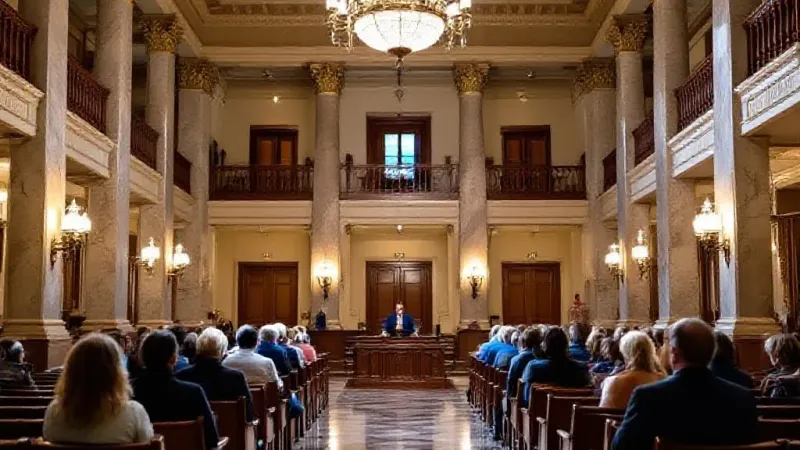
Bismarck, ND – North Dakota legislators cleared initial votes on two separate bills addressing kratom on Thursday, measures that present differing approaches to the substance and could complicate the special session as lawmakers aim to conclude business on Friday.
House Bill 1628, which proposes strict regulation of pure-leaf kratom for individuals 21 and older, passed the House with an 86-6 vote. This bill includes provisions for licensing and labeling, sets criminal penalties for violations, and grants enforcement authority to the Attorney General. During House debate, representatives discussed potential costs, including a $10,000 licensing fee for retailers, and considered whether local municipalities could impose their own kratom bans. Rep. Eric Murphy, R-Grand Forks, highlighted the need for regulation, stating that it’s "a major step in a direction to protect all of our constituents that use this every day." The bill also aims to keep natural kratom available for pain relief users while allowing more time for the 2027 Legislature to further address the issue. However, Rep. Don Vigesaa, R-Cooperstown, noted that the Attorney General’s office would need to write and adopt extensive rules before licenses could be issued, suggesting "very little action" would likely occur before the 2027 legislative session.
Conversely, Senate Bill 2408, introduced by Sen. Michelle Axtman, R-Bismarck, passed the Senate in a 46-1 vote. This bill seeks a permanent ban on both natural and synthetic forms of kratom, classifying its alkaloids and synthetic derivatives as controlled substances akin to LSD and heroin. Penalties for ingestion and possession would escalate with repeated offenses, beginning as an infraction with a potential fine of up to $1,000 and progressing to a Class C felony for three or more possession offenses, which carries a penalty of up to five years in prison and a $10,000 fine. Sen. Axtman emphasized a desire for North Dakota to be a leader in this area, stating, "I’d like to make sure that we’re a leader in this space and that we don’t stand in the way of this ban." During Senate debate, lawmakers weighed the use of kratom for pain relief against concerns from medical professionals about its addictive nature, withdrawals, treatment resources, and implications for law enforcement. Sen. Jeff Magrum, R-Hazelton, who has used natural-leaf kratom for back pain, questioned the abrupt shift to a total ban after lawmakers chose not to study the issue last year, advocating for a plan that regulates natural kratom while banning synthetic products. Sen. Kristin Roers, R-Fargo, a registered nurse, supported advancing the ban and continuing to monitor kratom issues.
With both bills now set to swap chambers for their second votes on Friday, it remains uncertain how much support a total ban will garner in the House. Several House Republicans in a caucus meeting expressed a preference for regulating natural leaf kratom while simultaneously banning synthetic substances. Rep. Ben Koppelman, R-West Fargo, indicated his understanding of having separate options for synthetic and natural products. House Majority Leader Mike Lefor, R-Dickinson, urged House Republicans to support a full ban, citing extensive public testimony and committee support. Some House Republicans voiced opposition to a total ban, concerned about its impact on residents who rely on natural kratom for pain relief.
This legislative action follows Governor Kelly Armstrong's executive order from August, which temporarily banned all natural and synthetic kratom products across North Dakota for approximately one month. A synthetic derivative known as 7-OH is also outlawed by an emergency pharmaceutical rule. Governor Armstrong's temporary ban was precipitated by a similar temporary prohibition of synthetic products federally by the U.S. Drug Enforcement Administration. Friday marks the third day of the special session called by the governor specifically to address kratom. Some House Republicans have raised questions about potential scenarios involving the kratom bills that could extend the special session beyond its planned Friday conclusion. Despite the differing approaches, Senate Majority Leader David Hogue, R-Minot, commented, "Both houses support a ban on all synthetics and derivatives, and we’ll find a way to do that."