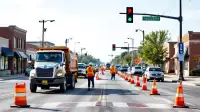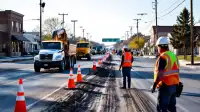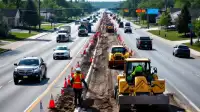
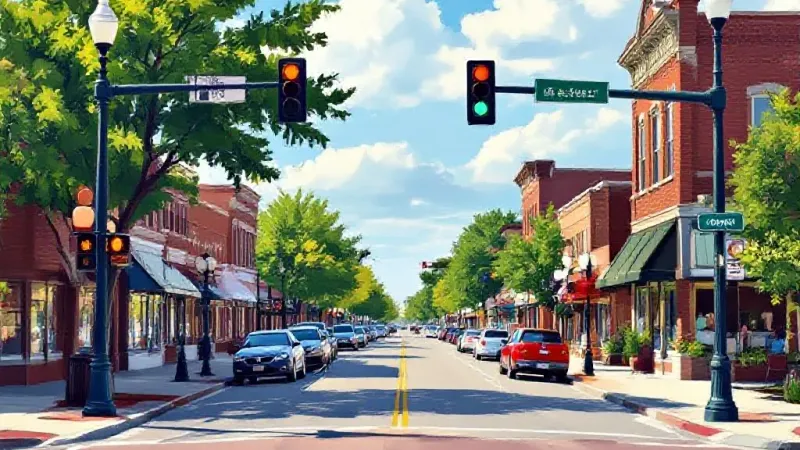
Bismarck, ND – The intersection of 5th Street and Front Avenue in Bismarck will transition from a traffic signal to an all-way stop for a trial period starting Tuesday, October 27, 2026. This change is slated to last for several months, according to information reported by City of Bismarck - News Flash. The move aims to address an aging traffic control system and prepare for future road construction in the area.
City of Bismarck Traffic Engineer Chris Holzer indicated that the existing traffic signal has been in use for a duration significantly exceeding the typical lifespan for such equipment, which he noted is usually 30 to 40 years. Records show the signal was initially installed in 1978. This trial period comes ahead of a planned road construction project in 2027, which will affect portions of Front Avenue and 5th Street, bringing permanent changes to the intersection. Holzer explained that as part of this upcoming project, the city must either replace or remove the current traffic signal.
A key factor in the decision to implement an all-way stop is the current traffic volume at the intersection. According to Holzer, existing traffic volumes do not meet the federal criteria required for a traffic signal installation. A study was conducted to compare how the intersection operates with both a traffic signal and an all-way stop. The results of this study indicated that an all-way stop would lead to shorter lines of vehicles and reduced wait times for drivers compared to the current signal configuration.
During the multi-month trial, the city’s Engineering Department plans to closely monitor the intersection. This oversight will include reviewing any crashes that may occur within the trial zone. The department will also work in coordination with BNSF Railroad. This collaboration is specifically to observe traffic operations after trains pass through the railroad crossing located just north of the intersection. A primary concern for observation is the potential for southbound vehicles to back up from Front Avenue onto the railroad tracks. Should this specific issue be observed during the trial period, other traffic control options will be considered. These alternatives could include establishing N/S free-flow traffic, with stop signs then controlling only E/W traffic.