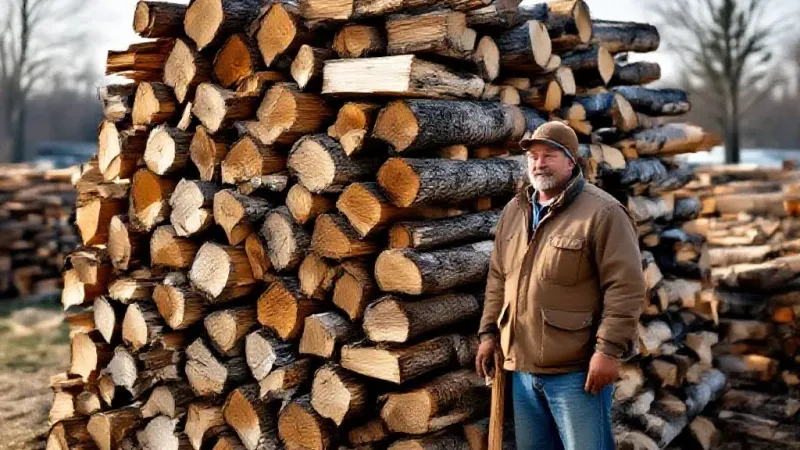
The Bismarck Landfill has announced it will no longer be giving away or distributing firewood, a change that applies to both free and for-purchase wood. This policy shift comes as a direct precaution following the recent announcement of Emerald Ash Borer (EAB) in Bismarck. The primary goal of this measure is to help prevent the spread of this invasive insect and safeguard ash trees throughout Bismarck and its surrounding communities.
Toby Sheldon, City of Bismarck Solid Waste and Landfill Superintendent, acknowledged the importance of public understanding regarding this new policy. Sheldon stated, “We appreciate the public’s understanding and cooperation as we work to help slow the spread of this invasive insect.” This statement emphasizes the collaborative effort needed to address the EAB threat.
The decision by the Bismarck Landfill to discontinue firewood distribution is a direct response to the newly identified presence of EAB within the city. This move highlights the concern among city officials regarding the potential impact of the invasive insect on local ash tree populations. By ceasing all firewood distribution, the landfill aims to eliminate a potential avenue for the insect's movement from one location to another. The landfill's action is designed as a preventive step against the wider dissemination of the EAB.
The precaution is specifically targeted at protecting ash trees, which are present throughout Bismarck and the communities surrounding it. The cessation of distribution, regardless of cost, reflects a comprehensive approach to mitigating the risk. This means that residents seeking firewood from the Bismarck Landfill will find that neither free options nor purchased options are available, a consistent application of the new policy across the board.
The announcement of EAB in Bismarck prompted this immediate and decisive action from the Bismarck Landfill. This illustrates the seriousness with which city departments are addressing the threat posed by this invasive insect. The Landfill's superintendent specifically called for public understanding and cooperation, indicating that community involvement is seen as essential in the broader effort to slow the spread of EAB. The goal is to protect the ash tree population by limiting the chances of further spread originating from materials handled at the landfill, reinforcing the city's commitment to local environmental health.